Ketamine-Assisted EMDR in Scottsdale, AZ
The benefits of EMDR with a softer way in
Available January 2027
When EMDR Keeps Hitting a Wall
You’ve done the preparation. You know what you want to work on, but when you try to process it, something stops you. You go numb, get flooded, drift off, or spend what feels like too long on the same EMDR target, no matter how ready you feel.
That doesn’t mean you’re doing it wrong. Sometimes the hardest part isn’t the memory itself. It’s getting close enough to it for the reprocessing to begin. For some people, adding a low dose of ketamine is one way to approach that, with EMDR remaining the center of the work and processing.
What is Ketamine-Assisted EMDR?
Ketamine-assisted EMDR (KA-EMDR) means taking a low dose of prescribed ketamine and doing EMDR while you’re on the medicine. It can help to understand each on its own first to fully appreciate the combination of working with the two in conjunction.
What is EMDR?
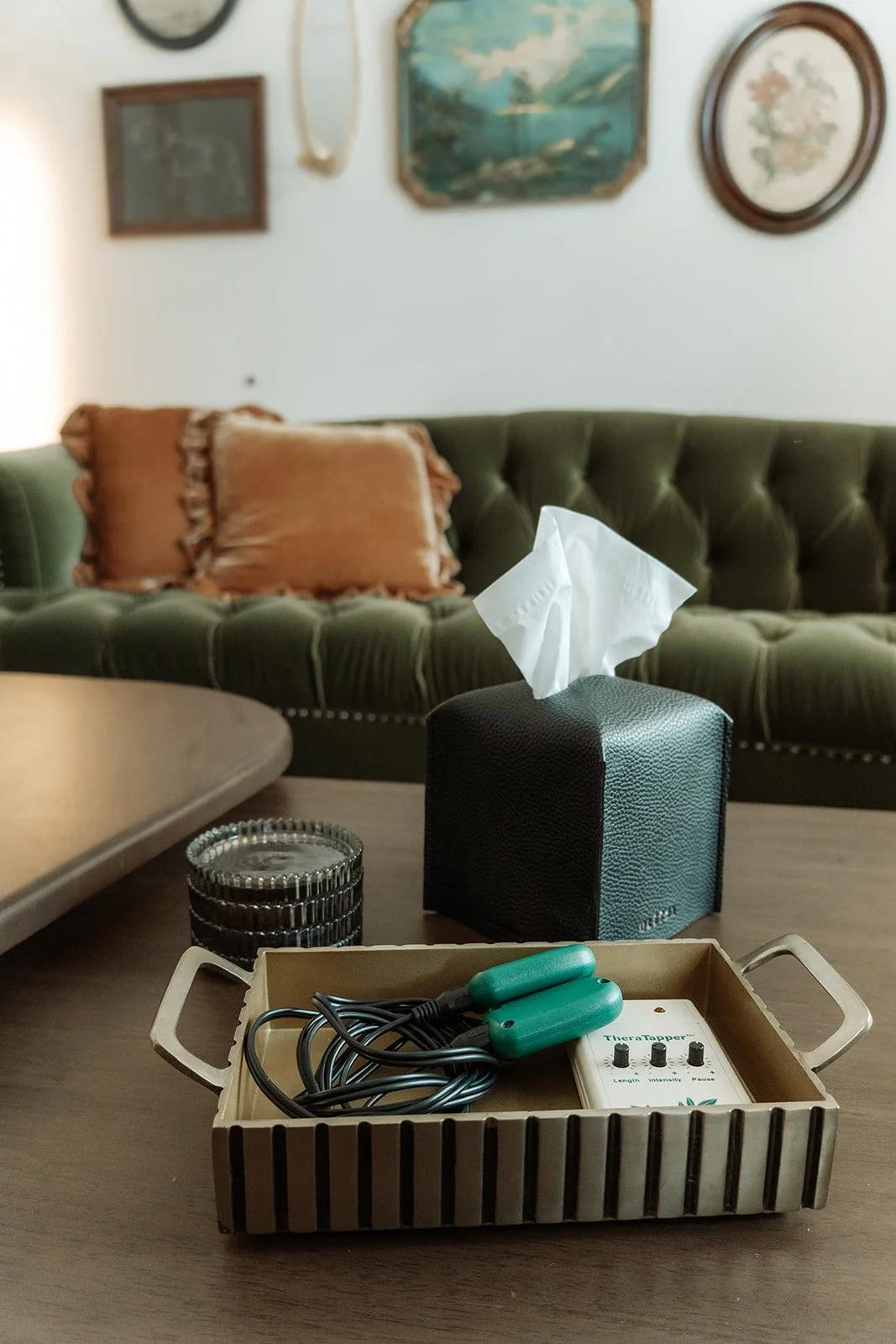
EMDR (Eye Movement Desensitization and Reprocessing) is a trauma therapy that helps your brain reprocess painful memories. While you hold a memory in mind, bilateral stimulation, like eye movements or tapping, helps your brain file it as something that happened in the past, and shifts the beliefs attached to it. It’s well supported for PTSD, and a foundation of my work.
What is ketamine?
Ketamine is a prescription medication used for decades in medical settings, mainly as an anesthetic. Doctors also prescribe it off-label for mental health. It works differently from most antidepressants, interacting with the brain’s glutamate system, and researchers believe it influences neuroplasticity, your brains ability to form new connections. In KA-EMDR, it’s used at a low dose, prescribed and managed by a licensed medical provider.
For more information on the traditional use for mental health, see my page on ketamine-assisted psychotherapy.
What do they look like together?
EMDR does the heavy lifting, since it’s the part that reprocesses the memory. Ketamine’s role is to help lower defenses. For many people, the hardest part of trauma work is getting close to the material without shutting down or getting flooded. Ketamine can create a more open, flexible state where the walls come down a little and it feels easier to stay with what comes up. In a traditional session, your usual defenses come with you, and in KA-EMDR, the altered state may make them easier to set down. I adjust the pace of processing to match how you’re feeling.
How does Ketamine-Assisted EMDR work?
Preparation
Preparation looks a lot like preparation for EMDR. We go through your history, choose the memories or patterns to work on, and build grounding skills and inner resources. You’ll also have a medical evaluation with my provider, who reviews your health and medications and decides whether ketamine is safe for you. We talk through what to expect and set specific intentions. We will take as much time as you need in preparation.
The KA-EMDR Session (3 hours)
We start by checking in, getting comfortable, and reviewing what we’re currently working on. Vitals are checked and you will take the prescribed low dose, following your provider’s instructions. We will give it time to take effect while grounding and settling into the space. We will begin EMDR processing at a pace that matches how you’re feeling, and I will be with you guiding you the whole time. As the effects ease, we will slow down, begin to close the session and talk through some of what came up. You will need a driver you trust to take you home after session.
Integration
The work doesn’t end when the medicine session does. In the days after, we meet to make sense of what came up, check how the memory feels, and connect it further to your daily life. Integration sessions are 50 minutes and can be done via telehealth or in person.
You may benefit from KA-EMDR if you:
Have done EMDR or other trauma and hit a point where the work stalls
Get flooded, go numb, or shut down when you get close to painful memories
Understand your story and your patterns but can’t shift how it feels
Carry beliefs about yourself, like “I’m not enough,” that feel fixed even though you know better
Have childhood or relational wounds that feel hard to reach
Look capable on the outside while struggling on the inside
Want a more focused approach, and are willing to prepare carefully and integrate afterward
If KA-EMDR isn’t a good fit for your goals and presenting concerns, I’ll tell you honestly, and we can look at other approaches such as traditional EMDR Therapy, Post Induction Therapy, or Accelerated Resolution Therapy.
What makes KA-EMDR with me different

I’m an EMDRIA Certified EMDR Therapist and Approved Consultant with seven years of experience in trauma and attachment, and EMDR is an important foundation of my work. I’ve spent years helping people work through things that feel impossible to move, and I’ve gone deep into the training and consultation that kind of work requires. I’ve also completed training in ketamine-assisted psychotherapy and in ketamine-assisted EMDR. I am always committed to continuing my own education, consultation, and learning process to ensure clients are getting the best care possible.
I don’t just run generic protocols with clients. I pay attention to what’s happening in front of me: how you’re feeling, what your system can handle, what’s coming up, and what you need. Preparation, pacing, and the structure of the session are shaped around you, not squeezed into a template.
When someone brings a hard history into the room, I want them to feel steady, seen, and in control of their own process, whatever the work looks like. For many of my clients, that’s what makes a difference in the healing process, and I hope it will be for you.
Frequently Asked Questions
-
Intake, preparation, and integration sessions are $225 per 50-minute session. The KA-EMDR session is about three hours and costs $800, priced separately because of its length, my continuous presence throughout, and the monitoring involved. Preparation takes as many sessions as you need. The medical evaluation, prescription, and related costs are billed separately by the medical provider. I’m an out-of-network provider and can provide a superbill for the therapy portion, which you can submit for potential reimbursement. We’ll go over the full picture in your consultation.
-
There’s no single answer. In your consultation, we’ll talk about your history, what you’ve tried, and what you’re hoping for, and my medical provider’s evaluation is part of the decision too. You don’t need to decide in advance.
-
Yes. Some people start with ketamine-assisted psychotherapy, with a medicine session and integration, and bring EMDR into later sessions without taking the medicine during EMDR. KA-EMDR is specifically doing EMDR while you’re on the medicine. We’ll decide together which fits you.
-
Not necessarily. If you’re new to EMDR, we may start with traditional EMDR before adding ketamine. Some preparation always comes first, and it looks a lot like preparation for EMDR: your history, your targets, and building grounding skills and inner resources.
-
Like any medication, ketamine has risks, and I’d rather you hear about them from me. Common short-term effects can include nausea, dizziness, a temporary rise in blood pressure and heart rate, drowsiness, and feeling disconnected for a while. Some people feel anxious or uncomfortable during the experience. That’s why the process has a medical evaluation, monitoring during the session, a driver afterward, and follow-up.
-
Yes. It’s a Schedule III prescription medication, used for decades in medical settings. It isn’t FDA-approved specifically for depression, anxiety, or trauma, and doctors may prescribe it off-label. I don’t prescribe it myself. That’s handled by the medical provider.
-
It depends on you and your goals, and I can’t give you a number before I know your history. It usually involves an intake, a medical evaluation, preparation, one or more KA-EMDR sessions, and integration. We plan together and adjust as we go.
-
I’m an out-of-network provider and can provide a superbill for the therapy portion. Coverage varies, and the medication and medical evaluation are billed separately by my medical provider.
Ready to find out if KA-EMDR is a good fit?
Schedule your consultation now to start sessions in January 2027
Ketamine-Assisted EMDR in Scottsdale, Arizona
Services offered virtually throughout Arizona and Texas
6609 N Scottsdale Rd, Suite G102, Scottsdale, AZ 85250