Anxiety Therapy in Scottsdale, AZ
and online throughout Arizona and Texas
You’ve been managing it for so long you’ve forgotten it doesn’t have to be this hard.
Not at work. Not with friends. Not at night when you’re supposed to be sleeping. You’re always three steps ahead, anticipating the next thing that could go wrong, preparing for a problem that hasn’t happened yet.
On the outside you may look like someone who has it all together. You are capable, reliable, the person people count on. The high achiever who gets things done. But the drive to do everything right, to never drop the ball, to always be on is anxiety in disguise.
Inside there’s a constant hum of worry that never fully quiets, and you’re exhausted from carrying it.
Your brain won’t shut off…

Anxiety is more common than you think
Anxiety is one of the most common mental health concerns in the United States, and one of the most underrated, especially in high-functioning adults who have learned to manage it well.
40 million adults in the US experience anxiety disorders, making it the most common mental health condition in the country
Many high-functioning adults with anxiety go years without support because they don’t look like someone who needs it
Anxiety that goes unaddressed often deepens over time, becoming more pervasive and harder to manage
Untreated anxiety is strongly linked to burnout, relationship difficulties, and the physical health problems
Your brain runs on a loop replaying conversations, anticipating problems, and catastrophizing outcomes
You struggle to be present because your mind is always somewhere else
You say yes when you want to say no to avoid conflict or disappointing people
You worry about your worrying
You’ve been told to “relax” which has never once actually helped
Does this sound familiar?
Anxiety isn’t just a thinking problem, it lives in the body
Anxiety lives in the nervous system, and it’s often connected to something much older than whatever you’re currently worrying about.
Most anxiety treatment focuses on managing symptoms - breathing exercises, cognitive reframing, relaxation techniques. While skill practice is critical when working with anxiety, it is just as critical to get to the root of the fears and over analysis.
For many people, anxiety is the nervous system responding to past experiences, often early ones, that taught them the world wasn’t safe, that it’s critical to stay vigilant, or that feeling safe meant something bad would happen. Understanding and healing those roots is what creates lasting relief rather than just better coping.
We work on two tracks simultaneously.
The first is stabilization and skill building. We start by understanding your specific anxiety patterns and triggers - what sets it off, what keeps it running, and what your nervous system needs to regulate. We work on real tools for tolerating uncertainty without spiraling, addressing the people-pleasing and perfectionism that feed anxiety, and building practical skills for sleep, body tension, and nervous system regulation.
The second is the root cause work. Anxiety doesn’t come from nowhere. it developed for a reason, and until we address what that reason is, it keeps coming back or latching onto something new. We go back to the early experiences that taught your nervous system to stay on high alert, identify what your anxiety has actually been protecting you from, and use EMDR and ART to reduce the emotional charge of the experiences driving it. This is where the lasting relief comes from - not just managing anxiety better, but actually healing what’s underneath it.

My Approach to Anxiety Therapy
Finally quit the mental loop that keeps you up at night
Feel present in your life instead of always bracing for what’s next
Stop performing and people-pleasing your way through every interaction
Regulate your nervous system so your body isn’t always in fight-or-flight
Build relationships that feel genuinely safe rather than constantly managed
Feel like yourself - calm, grounded, safe
Anxiety therapy can help you…
Approaches I Use for Anxiety Therapy
-
![Therapist holding EMDR bilateral stimulation buzzers during session, EMDR anxiety therapy Scottsdale Arizona]()
EMDR Therapy
Eye Movement Desensitization and Reprocessing helps process the early experiences that put your nervous system on high alter, reducing anxiety at the root rather than just managing the symptoms.
-
![Therapy office details with planner and books, Post Induction Therapy anxiety and trauma treatment Scottsdale Arizona]()
Post Induction Therapy (PIT)
PIT helps identify and heal the childhood experiences that first taught your nervous system to stay on high alert.
-
![Therapist writing notes during Accelerated Resolution Therapy session, ART anxiety therapy Scottsdale Arizona]()
Accelerated Resolution Therapy (ART)
ART quickly reduces the emotional charge of anxiety-producing memories and experiences.
-
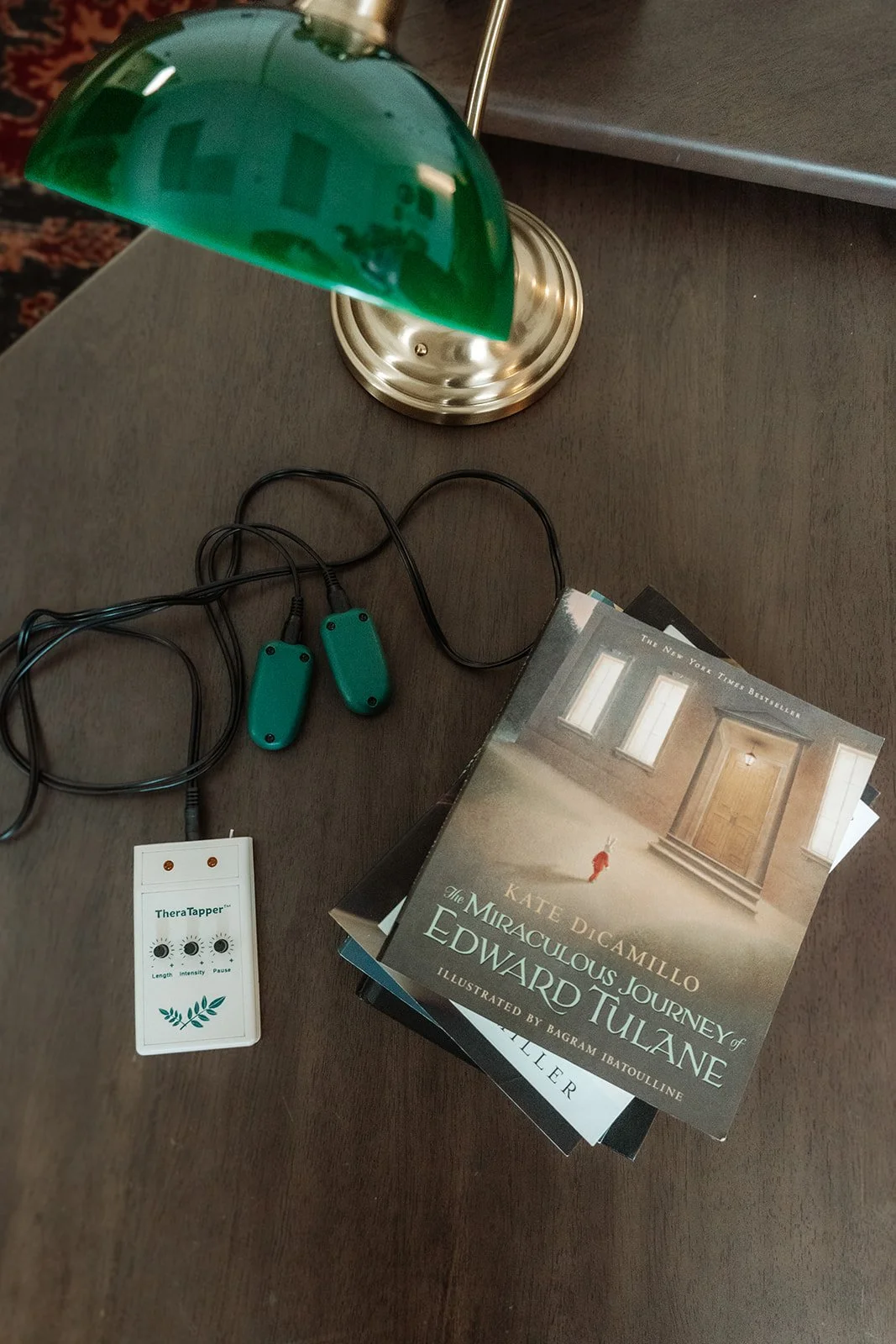
![Therapy office with Theratapper bilateral stimulation device and books, anxiety intensive therapy Scottsdale Arizona]()
Intensive Therapy
For clients who want significant relief in a condensed timeframe, intensives offer extended focused sessions designed to go deeper faster.



Frequently Asked Questions
-
Everyone worries sometimes, that’s part of being human. Anxiety that benefits from treatment is worry that feels out of proportion, hard to control, or persistent enough that it’s affecting your quality of life, relationships, or functioning. If anxiety is taking up significant mental energy or getting in the way of things that matter to you, that’s enough of a reason to explore support.
-
Possibly - and here’s why. A lot of anxiety treatment focuses on symptom management teaching you to cope with anxiety rather than addressing what’s driving it. The approaches I use are specifically designed to go to the root. If previous therapy felt like it only scratched the surface, this work tends to feel very different.
-
Yes, and research strongly supports its effectiveness. EMDR was originally developed for trauma but has been extensively studied for anxiety disorders as well. It’s particularly effective for anxiety that is rooted in past experiences, which for most people, is exactly what’s driving it.
-
Not necessarily, though medication can be a helpful part of treatment for some people. I work collaboratively with prescribers when medication is part of your care, but many clients make significant progress through therapy alone. This is something we can talk through based on your specific situation.
-
It depends on the type and severity of anxiety and how your nervous system responds to treatment. Some clients notice meaningful relief relatively quickly - especially with approaches like EMDR and ART that are designed to accelerate processing. Others prefer or need longer term support. We’ll talk about realistic expectations early on and reassess regularly.
-
Yes. Anxiety is almost always your nervous system responding to something - often something that made sense at one point, even if it doesn’t serve you anymore. The good news is, you are not wired this way permanently; your nervous system learned this pattern, and it can learn something more balanced and regulated.
-
Anxiety is more of a persistent, ongoing state of worry, tension, and hypervigilance that can build gradually and stick around. A panic attack is a sudden, intense surge of fear that peaks quickly, often with physical symptoms like a racing heart, shortness of breath, or a feeling of losing control. You can experience anxiety without ever having a panic attack, and panic attacks can happen when someone doesn’t identify as having chronic anxiety.
Your nervous system learned to stay on high alert for a reason.
Let’s help it finally learn that it’s safe to rest.
Anxiety Therapy in Scottsdale, Arizona
Services offered virtually throughout Arizona and Texas
6609 N Scottsdale Rd, Suite G102, Scottsdale, AZ 85250